In industrial operations, high-pressure bolted flange joints are critical components that ensure pressure equipment functions safely and reliably. While they may appear straightforward compared to larger plant assets, improper assembly or maintenance of these joints is a frequent source of leaks, equipment downtime, and safety incidents. Achieving consistent mechanical joint integrity requires a disciplined approach and adherence to proven standards such as ASME PCC-1.
ASME PCC-1 provides a structured approach to assembling bolted joints that reduces risk and improves reliability. Understanding and applying this standard is especially important during field maintenance, shutdowns, and turnarounds, where joints are disassembled and reassembled under challenging conditions.
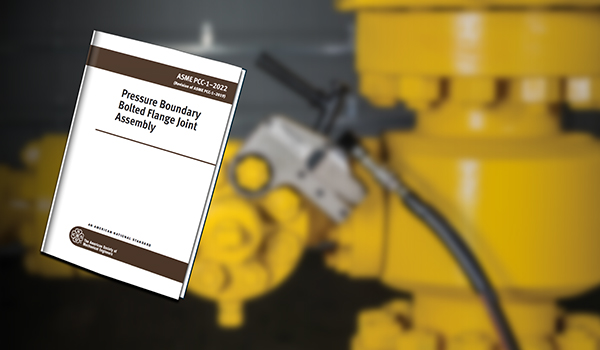
ASME PCC-1 Pressure Boundary Bolted Flange Joint Assembly was developed to help engineers maintain safe, leak-free bolted joints once equipment is in service. In 1993, ASME created a special task group to address the growing need for clear standards on inspecting and maintaining pressure equipment after it goes into service. This effort led to the formation of the Post Construction Committee (PCC), which focused on developing guidance for post-construction integrity, including bolted flange joints.
Bolted flange joints are a common source of leaks during field maintenance, repairs, or plant shutdowns. PCC-1 provides practical, repeatable methods for assembling, inspecting, and reassembling joints, helping teams avoid downtime and costly repairs.
Over time, the standard has evolved to include guidance on training, controlled assembly methods, and modern tooling, making it a benchmark to endure mechanical joint integrity in piping and pressure equipment during shutdowns, turnarounds, and routine maintenance. At the time of writing, ASME PCC-1 2022 is the most recent version.
ASME PCC-1 2022 is organized to guide engineers through the full process of assembling and maintaining bolted flange joints, from high-level guidance to detailed practical instructions:
Foreword and Summary of Changes: These sections explain the history of the standard and highlight updates since the last edition. ASME make it clear from the outset that specific words indicate the level of obligation:
Pressure Boundary Bolted Flange Joint Assembly: The first main section of the standard begins with the scope an introduction, and then sets out the requirements for safe joint assembly, including:
Fulfilling these requirements is vital for maintaining mechanical joint integrity and preventing failures during shutdowns, turnarounds, and field maintenance.
Appendices: At 100 pages, the appendices in PCC-1 provide the bulk of this document and contain detailed tables, diagrams, procedures, and examples to support the main requirements. They delve deep into each critical area to provide a thorough and detailed reference to help engineers apply PCC-1 consistently and effectively in the field.
Overall, the standard combines clear requirements with extensive reference material, making it both a practical guide for daily operations and a detailed resource for complex maintenance projects.
The 2022 edition makes ASME PCC‑1 clearer, stronger, and more practical for field use. It shifts the focus from simply tightening bolts to understanding the fundamentals of sealing, achieving the correct gasket stress for a safe, leak‑free joint. Released in September 2022, this version was rewritten in line with the ASME Style Guide, transforming PCC‑1 from a guideline into a formal standard. It provides more precise language, clearer assembly instructions, and sets the stage for future updates through early implementation cases.
Mechanical joint integrity refers to the ability of a bolted joint to maintain a tight seal under all expected operating conditions, including pressure, temperature changes, vibration, and long-term service. When joint integrity is compromised, the consequences can be severe:
Maintaining joint integrity often requires more than basic tools. Many operators rely on controlled bolting services, precision equipment for sale or rental, and experienced personnel to ensure joints are assembled correctly the first time.
Understanding the following elements is essential to achieving consistent, effective bolted flange joint assembly in the field. Each point highlights a key part of bolted flange joint assembly and maintenance:
Training and Qualification of Personnel
Personnel assembling or maintaining bolted joints must be properly trained and qualified to follow PCC-1 procedures, ensuring consistency and reducing the risk of human error.
Cleaning of Gasket Seating Surfaces
Proper cleaning of gasket seating surfaces removes debris, corrosion, and residues that can compromise the seal and lead to leaks.
Examination of Flange and Fastener Seating Surfaces
Inspecting flanges and bolt/nut seating surfaces ensures there are no scratches, cracks, or irregularities that could affect joint integrity.
Alignment of Flange Joints
Correct alignment of flanges ensures even gasket compression and uniform load distribution, preventing uneven stresses that can cause leaks or joint failure.
Gasket Installation
Proper gasket selection and installation are critical for achieving the intended seal and maintaining pressure boundary integrity throughout service.
Lubrication
Applying the correct lubrication to bolts and nuts reduces friction variability, helping achieve accurate preload and consistent joint performance.
Tightening Procedures
Following recommended tightening sequences and methods—such as torque, turn-of-nut, or tensioning—ensures bolts achieve the correct preload and load distribution.
Optional Practices
PCC-1 includes additional optional practices, such as the use of washers, measurement techniques, or verification tools, to enhance assembly quality and reliability.
Joint Pressure and Tightness Testing
Conducting hydrostatic or pneumatic testing verifies that the joint is leak-free and meets performance requirements before returning equipment to service.
Record Keeping
Documenting assembly procedures, torque readings, inspections, and tests provides traceability and supports long-term maintenance planning and compliance.
Joint Disassembly
Careful disassembly protects flange and gasket surfaces, preserves bolt integrity, and ensures joints can be reliably reassembled in future maintenance or shutdowns.
Historically, bolted joint assembly often relied on experience passed down informally by seasoned technicians and ad-hoc company procedures. While experience is valuable, inconsistent practices can increase risk.
ASME PCC-1 replaces guesswork with proven engineering principles, verified bolt loads, and traceable assembly records. For engineers working on shutdowns and maintenance, this structured approach improves safety and reliability.
Adopting ASME PCC-1 during maintenance or shutdowns offers clear benefits:
In pipeline and midstream operations, these benefits are enhanced when combined with pipeline integrity solutions, online monitoring, and on-site technical support.
ASME PCC-1 is widely recognized because it is:
It provides guidance for both routine maintenance and major shutdowns, where specialist bolting services, on-site machining, and other on-site support are often required.
For new engineers, the best way to apply PCC-1 is to:
To a beginner, bolted joints may seem simple, but they’re critical to plant safety and reliability. ASME PCC-1 has become the benchmark for mechanical joint integrity, providing repeatable methods, training guidance, and modern assembly techniques.
For new engineers, following PCC-1 during maintenance, turnarounds, or pipeline work ensures joints are assembled safely, leaks are prevented, and equipment reliability is maximized. Using the right services, equipment, and training makes these principles practical in the field.
How to Repair Critical Pipeline & Process Equipment Failures Without Shutdown
February 25, 2026
Electrical Discharge Machining (EDM): Precision Material Removal for Critical Components
February 25, 2026
Pipeline & Process System Cleaning: An Overview for Oil, Gas, Petrochemical & Power Industries
February 19, 2026